Computing
Computing curriculum statement
Intent
At Badsworth C of E Junior and Infant School we intend to embed deep links with computing across a variety of curriculum subjects, in particular mathematics, science and design technology. Our progressive curriculum continually builds on prior learning and knowledge to consolidate previous skills and deepen pupil’s understanding of the subject as a whole. We also ensure staff have regular access to relevant continued professional development which is continually revised according to the needs of staff to reflect the ever-changing digital world. This ensures all pupils have consistent access to quality teaching in computing.
A fundamental value that is taught throughout children’s learning journey is online safety. Children at Badsworth C of E Junior and Infant School are taught how to use technology safely, respectfully and responsibly. They are taught to recognise acceptable and unacceptable behaviour and identify a range of ways to report concerns about content.
Here at Badsworth C of E Junior and Infant school, we ensure everyone flourishes through the way we CARE, prepare and believe. Their computing education should also equip pupils to use computational thinking and creativity to understand and change the world. The core of our computing teaching is computer science, in which pupils are taught the principles of information and computation, how digital systems work and how to put this knowledge to use through programming. Once these elements have been taught, pupils are equipped to use information technology to create programs, systems and a range of content. Our teaching should also train children to be digitally literate; they should be able to safely navigate through a digital world as they use and express themselves creatively through information and communication technologies. Pupils should leave Badsworth C of E Junior and Infant School as active and conscientious participants of an increasingly digital world.
Implementation
Our curriculum uses the scheme of learning, Teach Computing, created by the Raspberry Pi Foundation on behalf of the National Centre for Computing Education (NCCE). As such, all learning objectives throughout the scheme have been mapped to the NCCE’s ten strands of computing taxonomy to ensure comprehensive coverage of this subject in the National Curriculum; as Teach Computing is based on a spiral curriculum, a clear progression is evident and children revisit and build on learning as they move through school. The units in this scheme are tailored to fit with our whole school long-term plan to make relevant links where possible with overarching units of work. Content is specifically taught through four primary themes – computing systems and networks, programming, data and information, and creating media. Specific vocabulary is taught explicitly and built on as children progress through school. Pupils are taught the necessary vocabulary, skills and knowledge throughout their learning journey and are appropriately challenged.
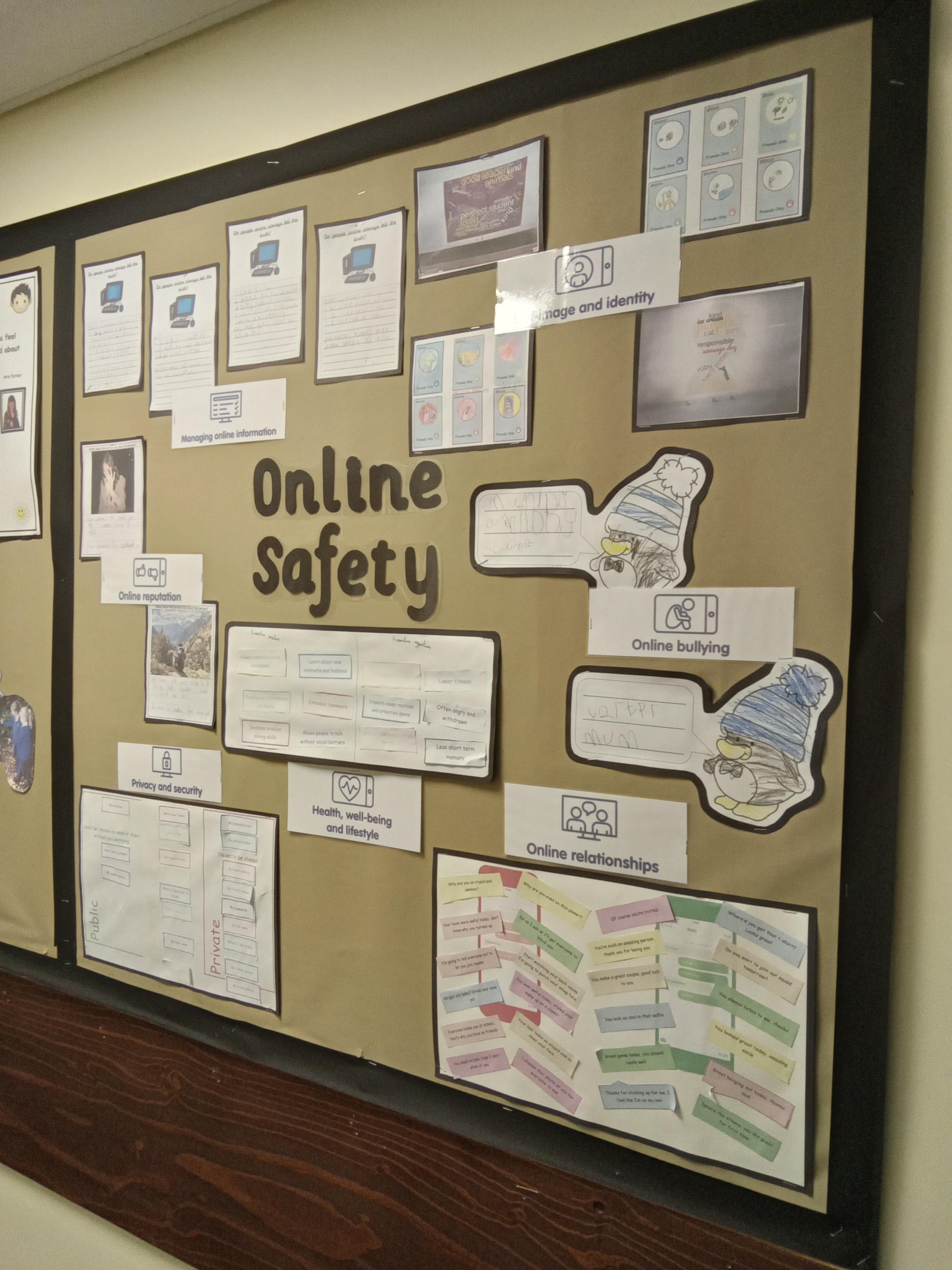
Every half term we recap our children’s safeguarding policy when the importance of online safety is revisited and key messages are reiterated. As a school, we annually mark Safer Internet Day also to highlight to children the significance of online safety and explore what this looks like in a variety of age-appropriate contexts.
During the course of KS1, children are taught to use technology confidently and purposefully to communicate their thoughts creatively. This is done through various activities including identifying technology and its uses, adding and formatting text, creating digital art/photography and simple programming. In KS2, we encourage an increase in independence where children are expected to lead their own learning through a variety of activities including using databases and spreadsheets, editing digital images, exploring information sharing and developing confidence with physical computing and more advanced programming.
Across both Key Stages, we strive to have ongoing relevant cross-curricular themes that incorporate the computing skills taught during discrete sessions. Children access a weekly timetabled session to ensure pupils have regular access to the Chromebooks to complete their specific computing tasks in class. Children also have the opportunity to apply these skills using technology in other curriculum areas; Chromebooks and tablets are used both in classrooms and around school to fulfil these various curriculum objectives.
Preceding the formal teaching of the computing curriculum in KS1 and KS2, children in EYFS have the opportunity to explore technology as part of continuous provision. As well as this, they take part in adult facilitated activities with a focus on computational thinking skills (problem solving skills that can be used in everyday life) which directly link to the characteristics of effective learning and the prime and specific areas of learning. These activities are taken from Barefoot Computing which lays foundations for later learning and often feature ‘unplugged activities’ without the need for using technology.
Impact
The impact of our curriculum is that computing has a high profile within school. Pupils enjoy using technology and gain an understanding of how the role of computing is important in life today. They leave Badsworth C of E Junior and Infant School being able to confidently use a wide range of hardware and software by applying their computational thinking.
Our children value online safety and communicate respectfully and safely with one another. Computing hardware and software are utilised to enhance the learning outcomes of children across the curriculum.
Our use of Google Classroom allows children to build a portfolio of creative work, demonstrating how their technical skills and understanding of the subject have progressed during their learning throughout their time at this school.
This impact can not only be seen in children’s individual accounts and whole school displays, but also by listening to the children themselves. We value pupil voice so children across the key stages share their thoughts with the subject leader. Through our tailored and inspiring curriculum, children will gain an understanding of wider opportunities of computing specialty skills, meaning they are well prepared for their next steps of education and future careers.
Computing Curriculum Documents
If you want to see our related Online Safety policy, follow the link below: